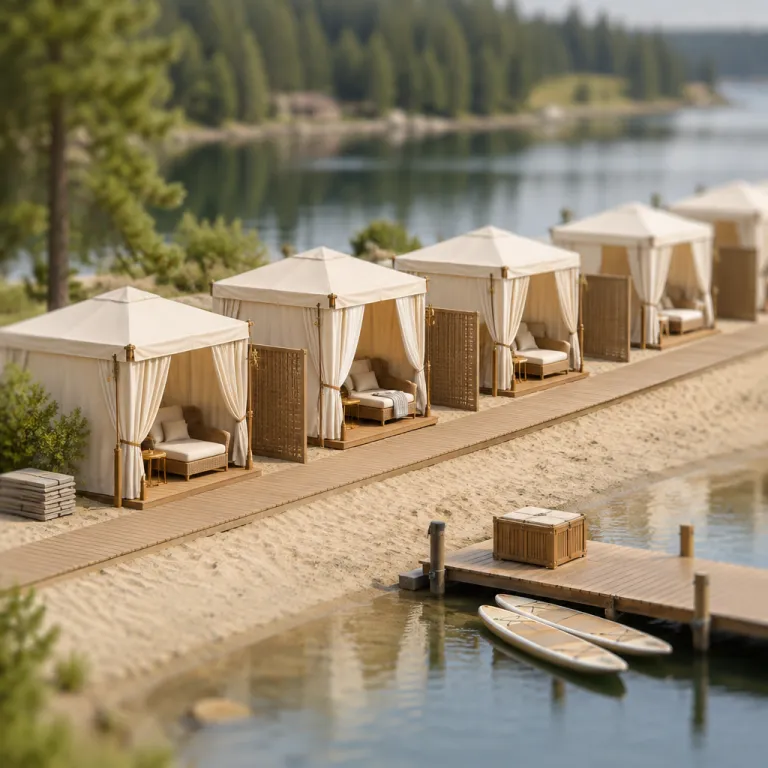
Understanding Camp Richardson resort beach cabana concerns for discerning guests
Questions about Camp Richardson resort beach cabanas usually start with expectations around privacy and comfort. Luxury travelers arriving at the south shore of Lake Tahoe often imagine a secluded lake view, hushed surroundings, and seamless, resort-style service from the moment they check in. When they instead encounter a lively public beach, shared campground facilities, and a mix of cabins, lodge rooms, RV pads, and tent sites, the contrast can feel jarring.
Before you reserve any cabana or cabin at Camp Richardson, it helps to understand how the resort, campground, and marina share the same forested shoreline. The property lies within the Lake Tahoe Basin Management Unit, under a framework that involves both private concessionaires and the United States Forest Service. That partnership shapes everything from beach access and shoreline rules to parking limits and dog policies. As a result, some frustrations that guests attribute to Camp Richardson cabanas actually stem from basin-wide management decisions rather than from the on-site resort team alone.
Visitors accustomed to a traditional luxury beach resort sometimes underestimate how active the south Lake Tahoe shoreline becomes in summer. The sandy beach attracts day users from across the South Shore, while the adjacent campground—with tent sites, standard RV pads, and full-hookup loops—draws families, youth groups, and long-stay camping enthusiasts. Add in the general store, the historic ice cream parlor, and the paved bike path that connects toward Emerald Bay, and you get a bustling recreation hub that may not match every premium traveler’s idea of quiet lakefront seclusion.
How a premium booking website should frame Camp Richardson cabanas
A well-designed luxury and premium booking website has a duty to present Camp Richardson resort beach cabana concerns with straightforward, honest detail. Instead of vague lifestyle copy, the property page should spell out that the resort sits beside an established campground and that tent camping, RV camping, and cabin lodging all share the same forest corridor and parking areas. This transparency allows guests to choose the right accommodation type and avoid surprises about noise levels, traffic, or beach crowds.
For example, a cabana listing should specify whether it faces the main beach, a quieter forest edge, or an internal road that leads toward the South Lake Tahoe bike path. It should also state if nearby sites include tent pads, RV spaces with water and electric hookups, or standard camping loops where dogs are allowed under Forest Service rules. When a booking engine labels each unit clearly as cabin, cabana, lodge room, or campground site, travelers can align their expectations with the real layout of Camp Richardson and the broader Lake Tahoe Basin Management Unit.
Solo travelers or couples using a premium platform may also appreciate guidance similar to advice in articles about navigating family-oriented properties. In the same way, a luxury website can explain how to enjoy the Camp Richardson shoreline even when surrounded by multi-generational camping groups—for instance, by recommending early-morning beach walks, late-afternoon lake time, or specific picnic table clusters that tend to stay calmer. Clear, human-centric descriptions turn potential friction points into informed choices and reduce anxiety about whether a particular cabana will feel too exposed or too busy.
Personalized guest services that address lakeside cabana expectations
High-end travelers evaluating Camp Richardson resort beach cabana options often care less about marble finishes and more about thoughtful, personalized guest services. A premium booking website can bridge the gap by offering tailored pre-arrival planning that respects both the rustic campground setting and the desire for comfort. This means asking whether guests prefer to be close to the beach energy or tucked along a quieter forest edge near tent camping areas and standard RV sites.
Once preferences are known, a concierge-style team can recommend specific cabin or cabana numbers—such as a lake-facing unit in the L10–L14 range or a forest-side option like C3–C6—explain which clusters sit closest to the general store or ice cream parlor, and outline the quickest walking route to Emerald Bay viewpoints. They can also clarify how water access works along the Lake Tahoe shoreline, where the bike path intersects with the resort, and which sections of the campground allow dogs, in line with Forest Service and basin management rules. By mapping these details onto the booking journey, the website transforms abstract concerns about Camp Richardson cabanas into concrete, manageable choices.
Premium platforms can further enhance trust by highlighting value-focused offers, similar in spirit to guides on securing exceptional value at upscale beach resorts. For Camp Richardson, that might mean curated summer packages that pair a lakefront cabana with guided bike path tours, stand-up paddleboard sessions on the lake, and reserved picnic table spaces away from the busiest tent sites. One returning guest described their stay this way: “We loved the historic vibe and the beach, but what made it work was knowing ahead of time that it’s more like a lakeside village than a sealed-off resort.” When guests see that the resort understands both the campground character and their comfort needs, worries about cabana suitability tend to soften.
Reading between the lines of reviews and official information
Many Camp Richardson resort beach cabana concerns originate in conflicting information between official descriptions and guest reviews. Some travelers praise the easy lake access, the historic charm of the Camp Richardson resort buildings, and the family-friendly campground atmosphere, while others focus on parking congestion, noise, and limited privacy. A sophisticated booking website should help readers interpret these mixed impressions with context rather than leaving them to guess.
When a review mentions crowded summer weekends, the platform can explain that the south shore of Lake Tahoe experiences peak visitation during school holidays and hot weather. It can also note that the campground and tent sites operate near full capacity during these periods, which naturally increases foot traffic around the beach, general store, and ice cream parlor. By contrast, shoulder-season stays may offer a calmer forest ambiance, with fewer RVs using full hookups and more open picnic table areas near the water.
Travelers should also understand how agencies like Recreation.gov and the United States Forest Service intersect with Camp Richardson operations. Some camping inventory—especially tent camping or standard sites with water and electric hookups—may appear on Recreation.gov under a Lake Tahoe Basin Management Unit listing, while cabins and resort rooms remain on private booking channels. A premium website that explains this split, and encourages guests to check both sources when planning complex trips, helps reduce confusion about availability, pricing, and how different parts of the property are managed.
Designing a quieter stay within a lively lakeside resort
Even with genuine concerns about Camp Richardson resort beach cabanas, it is possible to design a quieter, more refined stay. The key lies in understanding the physical layout of the resort, campground, and lakefront, then using that knowledge to select the right site or cabin. Guests who prioritize tranquility should look for units set slightly back from the main beach, near forest edges or less-trafficked internal roads, rather than directly on the sand.
On a premium booking website, filters can highlight cabanas and cabins that sit away from the busiest tent sites and RV loops with full hookups. A simple annotated site map might, for example, shade the main beach corridor in one color, mark quieter forest-side cabins like F1–F8 in another, and show where the bike path crosses the property and where dogs are allowed under Forest Service rules. With this information, travelers can book a cabin that offers easy access to the Lake Tahoe shoreline while avoiding the noisiest campground corridors during peak summer weekends.
Guests seeking digital disconnection may also appreciate editorial guidance similar to articles on resorts designed around unplugged experiences. At Camp Richardson, that could mean choosing a forest-facing cabana, planning early morning walks along the lake before the beach fills, and using the general store only during quieter hours. When a booking platform curates these strategies proactively and ties them to specific unit clusters or map zones, worries about crowds and campground activity shift from anxiety to anticipation of a thoughtfully orchestrated lakeside retreat.
Balancing rustic character with premium expectations
Camp Richardson occupies a rare position in the Tahoe Basin, combining a historic lakeside resort with an extensive campground and marina. This hybrid character creates both charm and complexity, especially for travelers arriving through luxury and premium booking websites. Many concerns about Camp Richardson resort beach cabanas arise when guests expect a fully insulated resort bubble rather than a shared recreational corridor that serves day users, campers, and overnight resort guests.
To balance rustic character with premium expectations, booking platforms should emphasize that cabin and cabana stays sit alongside tent camping, RV sites with water and electric hookups, and day-use beachgoers. The presence of a general store, an old-fashioned ice cream parlor, and a busy bike path signals a community hub rather than a secluded enclave. By framing the property as a historic South Lake Tahoe recreation village, not a conventional closed resort, the website helps guests align their mental picture with the actual management unit reality.
For travelers who still want elevated touches, personalized services can focus on what matters most in this environment, such as pre-stocked picnic table hampers, reserved parking near specific sites, or guided walks through the surrounding forest. Clear communication about where dogs are allowed, how the Forest Service regulates shoreline access, and which campground loops feel quieter at night also supports informed decisions. When guests understand both the benefits and trade-offs, any remaining cabana-related worries become part of a conscious choice rather than an unwelcome surprise.
Practical booking checklist for Camp Richardson cabanas and cabins
Addressing Camp Richardson resort beach cabana concerns starts with a practical, step-by-step booking checklist. First, decide whether you want to be close to the main beach energy or slightly removed in a forest setting near tent camping or quieter cabin clusters. Then, use the booking website filters to select your preferred accommodation type, whether that is a lakeside cabana, a traditional cabin, a lodge room, or a campground site with standard or full hookups.
Next, check the site map carefully to see how your chosen unit relates to the Lake Tahoe shoreline, the bike path, the general store, and the ice cream parlor. Look for notes about water and electric availability, dogs-allowed policies, and proximity to tent sites or RV loops, as these details strongly influence noise and privacy. If the platform integrates data from Recreation.gov or Forest Service notices, review any Lake Tahoe Basin or basin management advisories that might affect beach access, parking, or summer fire restrictions.
Finally, contact the property or the premium booking concierge with specific questions about your preferred cabin or cabana, rather than relying only on generic descriptions. Ask which sites tend to stay quieter at night, how far you will walk to the beach, and whether your picnic table area faces the lake or the internal campground road. By following this structured approach, you turn general worries about Camp Richardson cabanas into a tailored plan for enjoying the South Lake shoreline on your own terms.
Key figures about lakeside camping and resort stays
- According to the United States Forest Service, the Lake Tahoe Basin Management Unit receives roughly 5–7 million recreational visits each year, which helps explain why South Shore areas like Camp Richardson can feel very busy in peak summer. For current visitation and management information, travelers can consult official Forest Service publications.
- Data summarized by the Tahoe Regional Planning Agency indicate that day-use beach visitation can more than double on hot holiday weekends compared with shoulder-season weekdays, so travelers seeking quieter cabana stays should consider off-peak dates and midweek arrivals.
- Industry research from the American Hotel & Lodging Association consistently shows that guests who receive clear pre-arrival communication about noise, parking, and shared facilities report significantly higher satisfaction scores than those who do not, underscoring the value of detailed cabana descriptions.
- Recreation.gov booking patterns for Lake Tahoe Basin campgrounds often show that popular tent sites and RV sites with full hookups sell out months in advance, while some cabin and resort inventory remains available closer to arrival, which can influence how travelers plan multi-type stays that combine camping with cabana or cabin nights.
FAQ about Camp Richardson resort beach cabana concerns
Are Camp Richardson beach cabanas suitable for travelers seeking a quiet luxury stay ?
Camp Richardson beach cabanas can work for guests who understand that the resort sits beside a busy campground and public beach. Those who prioritize quiet should request units set back from the main shoreline and away from dense tent sites and RV loops, ideally in forest-side clusters highlighted on the property map. A premium booking website that shows these zones clearly will help you choose a cabana that best matches your noise tolerance.
How close are the cabanas and cabins to the campground and tent sites ?
The resort, cabins, cabanas, and campground share the same forested site within the Lake Tahoe Basin Management Unit. Some units sit very close to tent camping areas and RV sites with water and electric or full hookups, while others are tucked slightly farther into the trees or near quieter internal roads. Reviewing a detailed property map and asking for specific site recommendations—such as a particular cabin row or cabana cluster—is essential if you want more separation from campground activity.
Can I bring my dog to Camp Richardson cabanas or cabins ?
Policies about dogs allowed vary by accommodation type and by area of the property, and they must align with Forest Service regulations for the Lake Tahoe Basin. Some campground loops and certain cabin clusters may allow pets under leash rules, while other zones near the beach or specific tent sites may restrict them. Always check the latest pet policy on the booking website and confirm directly with the resort before you book, especially if you plan to use the beach or bike path frequently with your dog.
What is the best time of year to avoid crowd related cabana concerns ?
Peak summer weekends and holiday periods bring the highest concentration of day visitors, campers, and resort guests to the South Lake shoreline. Travelers who want fewer crowds around the beach, general store, and ice cream parlor often prefer late spring or early autumn, when weather can still be pleasant but campground occupancy is lower. Midweek stays during these shoulder periods usually offer the calmest experience for cabana and cabin guests, especially in forest-edge units.
Should I use Recreation.gov or a premium booking website for my stay ?
Recreation.gov typically handles many campground reservations, including tent sites and some RV sites within the Lake Tahoe Basin Management Unit, while private booking platforms manage most cabins, cabanas, and resort rooms. If you plan a mixed stay that combines camping with a few nights in a cabin or cabana, you may need to use both systems. A well-designed premium website will explain this split clearly and help you coordinate dates so that concerns about availability, parking, and logistics are minimized.