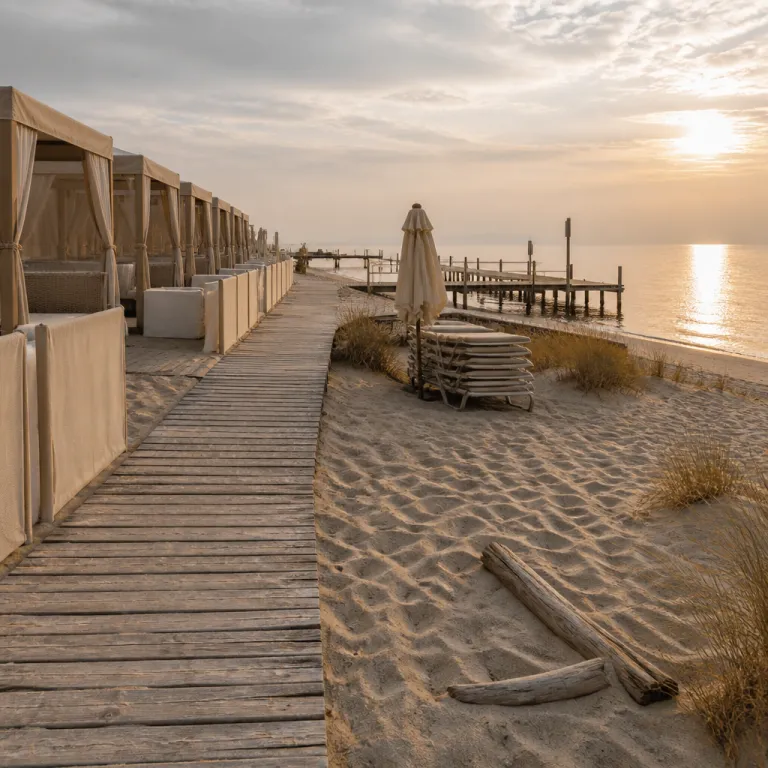
Mediterranean late summer: where the water stays warm and the crowds thin
The beach resort shoulder season best time visit often starts on the Mediterranean shorelines as August slides into September. Between late summer and early fall, this region becomes a sweet spot for season travel, with typical sea temperatures in the mid‑20s °C and noticeably fewer crowds than during peak summer. For business leisure travelers extending a trip from London or New York, this is the moment when the same luxury resorts feel calmer, more attentive, and quietly more indulgent.
In Greece, Sardinia, and the Adriatic coast, the peak season energy of July and August gives way to a slower rhythm, yet the beach remains fully serviced and the weather stays reliably dry in most years. This is the beach resort shoulder season best time visit if you want the best balance between warm water, open restaurants, and season crowds that can drop by roughly half compared with peak summer in many popular areas. Most major resorts confirm that August to October is the shoulder season at many beach resorts, and they see guests enjoying lower prices, experiencing fewer crowds, and benefiting from pleasant weather.
Couples who value privacy will notice that the time visit to the spa, the pool, and the beach club suddenly becomes flexible, with no need to reserve every sun lounger days in advance. Solo travelers, meanwhile, find that this shoulder season window makes it easier to secure oceanfront rooms at top hotels without paying peak season premiums. For both couples and solo travelers, the Mediterranean in this period offers experiences that feel bespoke, from private wine tastings in coastal vineyards to last light swims in bays that were packed only weeks earlier.
From a practical standpoint, this is also when a seasoned travel advisor earns their fee, especially for a complex multi destination trip that might combine a beach resort with European national parks or a short city stay. A good travel advisor will use flexible travel shoulder dates and dynamic pricing models to secure suites that were unattainable during peak season, often adding complimentary transfers or late check out where available. When you are planning shoulder dates around key meetings, that expertise turns a necessary work trip into a seamless leisure experience.
Caribbean and Atlantic: navigating the inverse calendar and weather risks
The Caribbean flips the usual calendar, which makes the beach resort shoulder season best time visit more nuanced between August and October. Rates at many high end resorts can fall by around a third from peak season, yet the weather risk from storms and hurricanes rises, so destination choice matters more than ever. This is where a precise understanding of weather patterns, season crowds, and insurance becomes as important as the infinity pool view.
For travelers who want the best odds of stable weather, the ABC islands — Aruba, Bonaire, and Curaçao — sit below the main hurricane belt and often keep their beach resorts fully operational during this shoulder season. Here, the time visit between late summer and early fall can deliver fewer crowds, long beach walks, and a calmer staff to guest ratio than during peak summer. Many couples use this period to secure oceanfront suites that were sold out in July and August, while solo travelers appreciate the quieter bars and more attentive service.
On busier islands, the same August to October window still works as a sweet spot if you plan carefully with a travel advisor who understands season travel patterns and hurricane season peaks from roughly mid August through late October. They will suggest flexible flights, robust travel insurance, and properties with strong contingency plans, ensuring your trip can pivot if the weather shifts. One Caribbean example worth studying is how Bavaro Beach all inclusive resorts set the standard in Punta Cana luxury, where the operational discipline around season crowds and storm protocols is as refined as the champagne list; you can explore this in more depth through this guide to Punta Cana’s benchmark all inclusive beach resorts.
For business leisure guests, this Caribbean shoulder season is often the only realistic time visit to combine boardroom commitments with a serious beach reset. You can fly in for meetings, then shift to a beach resort where the restaurants have space, the spa has last minute appointments, and the concierge has time to arrange tailored experiences such as private catamaran charters. The key is planning shoulder dates with enough flexibility to move a night or two if the weather forecast changes, which is where a responsive travel advisor and clear cancellation policies become non negotiable.
Indian Ocean and Southeast Asia: monsoon arbitrage and ultra private stays
Across the Indian Ocean, the beach resort shoulder season best time visit often runs from May through November, with August to October forming a particularly attractive window. In the Maldives, this is technically the southwest monsoon period, yet many days still bring long spells of sun, and the reduced occupancy transforms the guest experience. Lower season crowds mean higher staff to guest ratios, easier restaurant reservations, and the kind of unhurried service that peak season simply cannot deliver.
Resort managers quietly acknowledge that this is when upgrades and complimentary experiences become common, especially for repeat guests and business travelers extending a regional trip. A three night post meeting stay can turn into a five night escape when dynamic pricing makes overwater villas more accessible than during peak summer. For couples, this is the time visit when private sandbank dinners and late night spa sessions feel genuinely secluded, not staged against a backdrop of nearby tables.
Farther east, Southeast Asia offers its own version of monsoon arbitrage, particularly in Bali where the dry season often extends through October and the heaviest rains typically cluster from about November to March. For European and American travelers who have already used their main summer vacation, this late season travel window offers warm water, fewer crowds, and competitive rates at high end beach resorts. On Mexico’s Riviera Maya, a similar logic applies at properties such as those highlighted in this guide to Akumal beach resort escapes, where August to October can mean quieter beaches and more attentive service.
Ultra private properties with only a handful of villas show their true value in this period, when the entire beach can feel like an extension of your suite. For travelers who prize seclusion, this is the beach resort shoulder season best time visit to book places where there are nine villas and nothing else, as explored in this feature on ultra private beach resorts where seclusion is the service. Solo travelers in particular benefit from this, finding that staff have the time to curate highly personal experiences, from guided reef snorkels at dawn to chef led market visits in nearby fishing villages.
How cruises, river journeys, and hybrid itineraries fit the August to October window
For many executives, the beach resort shoulder season best time visit is not a standalone escape but the anchor of a wider itinerary. August to October is when cruises and river cruises often price more competitively, allowing you to pair a few days at a beach resort with a short cruise or a cultural detour. The result is a trip that feels layered and efficient, rather than a simple week on a single stretch of sand.
Ocean cruise lines such as Virgin Voyages, which focuses on adults only sailings, often run attractive late summer and early fall departures that dovetail neatly with shoulder season stays in the Mediterranean or Caribbean. On the river side, brands like Viking River and Cruises Viking schedule itineraries on the Danube or Rhône where the weather is mild, the crowds are lighter, and the vineyards are in harvest mode. A travel advisor who understands both cruise and resort operations can design planning shoulder strategies that align embarkation dates with the time visit that works best for your meetings and your preferred beach destination.
Hybrid itineraries also appeal to solo travelers who want more structure than a pure beach stay but still value downtime. You might start with a few nights at a coastal resort, then join one of the shorter river cruises for cultural immersion, before ending with a final beach resort stay to decompress. For couples, combining national parks with coastal hotels during this season travel window can be equally rewarding, especially when season crowds have thinned on both the hiking trails and the shoreline.
Whatever the configuration, the August to October window is a sweet spot where the best experiences shoulder tend to cluster for those who plan ahead. Travel agencies and airlines confirm that increased interest in off peak travel has led to more shoulder season promotions, particularly for flexible travelers who can shift dates by a day or two. As one industry explainer puts it succinctly, “What is shoulder season? The period between peak and off-peak travel times. Why travel during shoulder season? To enjoy lower prices and fewer crowds. Are beach resorts open during shoulder season? Most major resorts remain open with full services.”
FAQ
What exactly is shoulder season at beach resorts ?
Shoulder season at beach resorts is the period between peak season and the quieter off peak months, typically running from August to October in many destinations. During this time, weather often remains pleasant, but season crowds have eased and rates soften compared with the busiest weeks. For many travelers, this is the beach resort shoulder season best time visit because it balances value, comfort, and space.
Why is August to October such a good time visit for luxury beach stays ?
From August to October, many resorts report average savings of around 30 percent compared with peak summer, while maintaining full services. Sea temperatures in regions like the Mediterranean stay warm, and there are fewer crowds at pools, restaurants, and on the beach. This creates a sweet spot where couples and solo travelers enjoy premium experiences shoulder without peak season pressure.
How should I plan shoulder season travel if I am extending a business trip ?
Start by asking your travel advisor or corporate travel équipe to build in flexible dates around your meetings, then target destinations where August to October is recognized as shoulder season. Use travel websites and resort promotions to compare dynamic pricing, and always check weather forecasts and cancellation policies for the specific region. This planning shoulder approach lets you secure the best suites and flights while keeping options open if schedules or weather change.
Are cruises and river cruises worth combining with a beach resort stay in this period ?
Yes, many travelers use late summer and early fall to pair a few nights at a beach resort with cruises or river cruises, especially with lines such as Virgin Voyages and Viking River. These months often bring better value and fewer crowds on board, while ports are less congested than during peak summer. A well designed itinerary can include both cultural river experiences and relaxed beach time within a single trip.
What are the main risks of traveling in shoulder season, and how can I mitigate them ?
The main risks involve variable weather in regions affected by late summer storms, as well as limited availability during popular conference weeks. To mitigate this, verify resort availability early, consider travel insurance that covers weather disruptions, and work with a travel advisor who understands local season travel patterns and typical storm calendars. With these safeguards, most travelers find that the benefits of fewer crowds and better value outweigh the manageable risks.